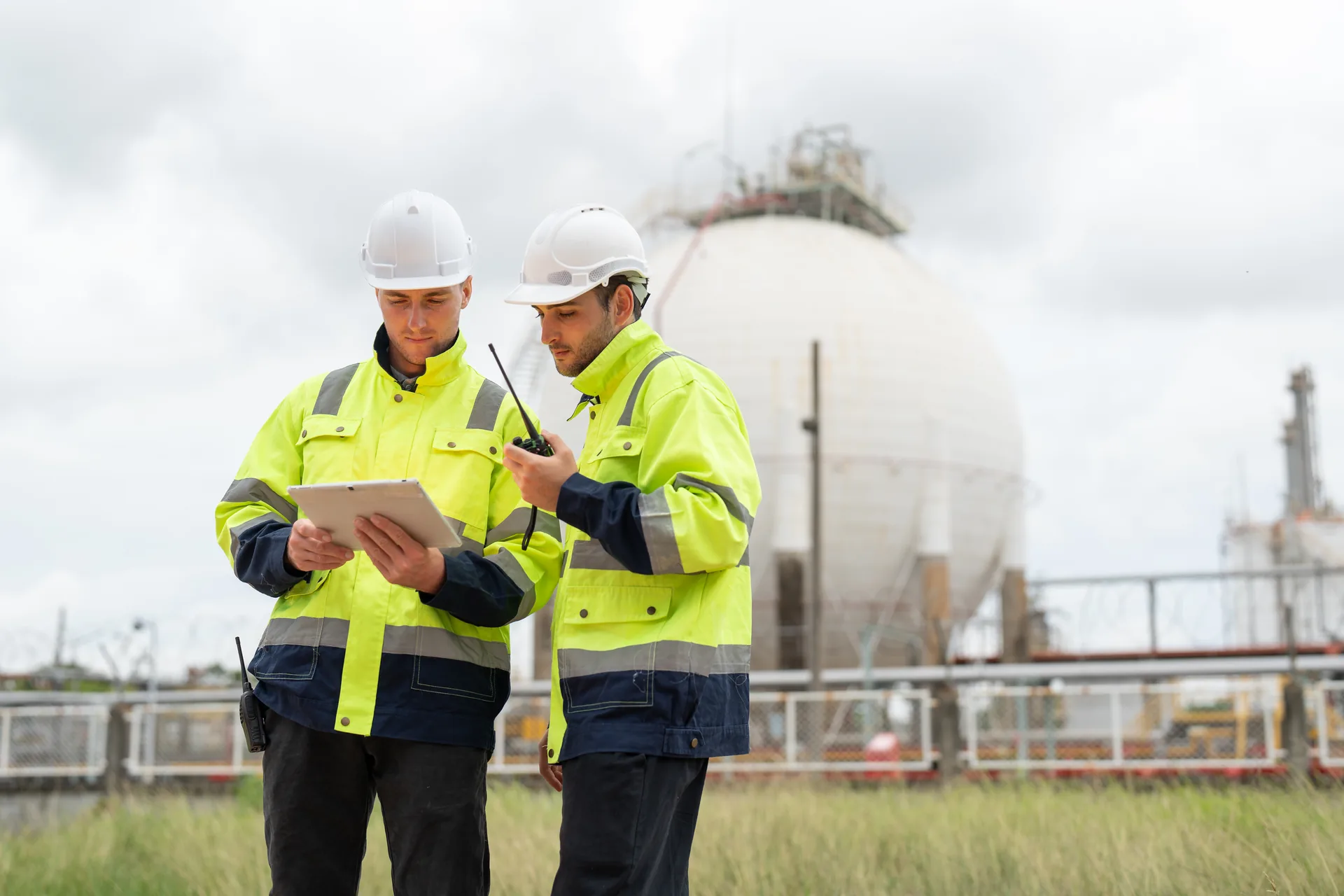
Process engineering is where a change to a refining or petrochemical process gets evaluated before it’s built. Common triggers include:
- A fix for a persistent operating issue
- Added capacity
- A new feedstock
Onyx’s process engineering services start from real operating experience: our engineers have worked inside refineries themselves, so the conversation starts from what happens on a unit day to day. The goal is a solution that meets or exceeds what the project needs.
Mechanical engineering centers on the physical systems a process depends on: pumps, heat exchangers, vessels, storage tanks, and the piping connecting them.
- Piping stress analysis using CAESAR II software.
- Piping design in CADWorks 3D.
- Deliverables: mechanical flow diagrams, modular designs, and equipment specifications, everything you need to purchase equipment or bring in a construction contractor.
- Vendor coordination: when a system needs to change, Onyx sizes and specifies the new equipment and works directly with vendors on costs and quotations.
Instrumentation, electrical engineering, and control systems splits into connected pieces of a project:
- Electrical engineering supplies the power requirements for a system, getting the right power to the equipment that’s running.
- Instrumentation and controls track what’s being measured, temperature, pressure, and flow at minimum, and how those variables get controlled to produce the product you’re making.
- Analyzers: for products like gasoline or diesel, online analyzers confirm the product stream stays within spec. Onyx either designs the analyzer or helps you source and engineer it.
- Control systems: Onyx helps you specify the systems that run the process, including programmable logic controllers (PLCs), distributed control systems (DCS), and triple-redundant safety systems, depending on what the project calls for.
Civil and structural engineering applies to anything on a project that needs a foundation, a structure, or an engineered site design:
- Foundation and structural analysis for vessels, pumps, and pipe racks, including full foundation design for new or modified structures.
- Platforms and ladders that provide access to different levels on tall tower structures.
- Pipe rack load analysis: when you need to run a new pipe through an existing rack, Onyx confirms whether the structure can support the added load, or redesigns it so it can.
- Drainage and site grading: when rainwater isn’t routing where it needs to go, Onyx surveys the site and designs the terrain modifications to fix it.
Site surveying and 3D laser scanning also fall under this discipline. Before a structure gets designed or modified, Onyx surveys how existing structures relate to each other on-site. It’s a capability most Gulf Coast firms don’t offer in house. That gives a project accurate as-built information before design work starts.
Estimating and scheduling isn’t a one-time deliverable tacked onto the end of a project. It starts at the inception, when you’re still defining the problem, and continues through completion of detailed engineering and design:
- Rough order-of-magnitude estimate: typically within plus or minus 100 percent, provided at the start of a project.
- Refined estimate: as the project develops, estimates get refined to plus or minus 50, 30, or 10 percent depending on what you need. Tighter estimates require more engineering work upfront to get real cost data on the design and equipment involved.
- Scheduling: Onyx integrates the engineering schedule with your target dates for construction and operation.
The goal at every stage is the same: giving you what you need to get a project funded, and a schedule that lines up with when you need it built and operating.